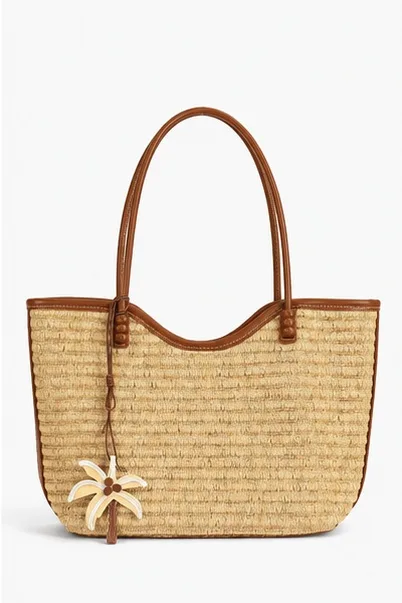
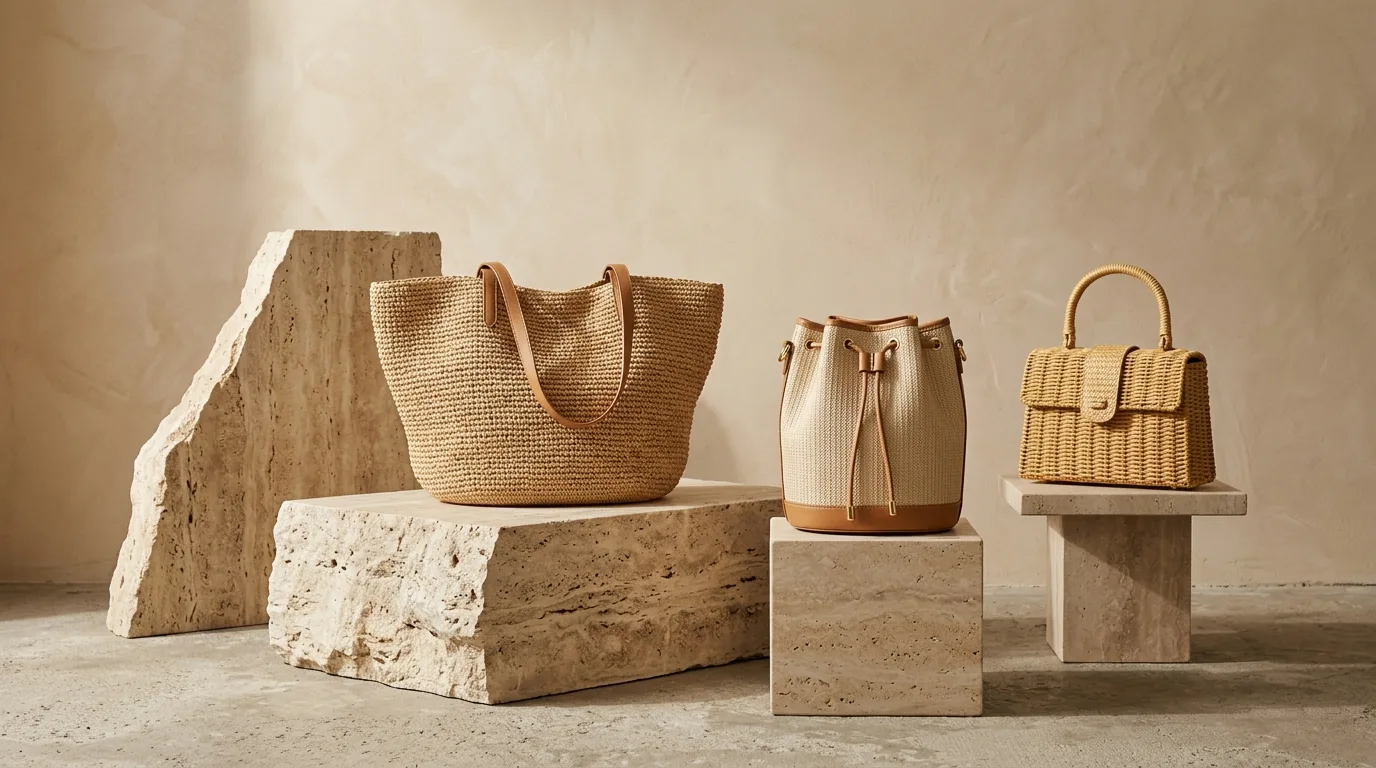
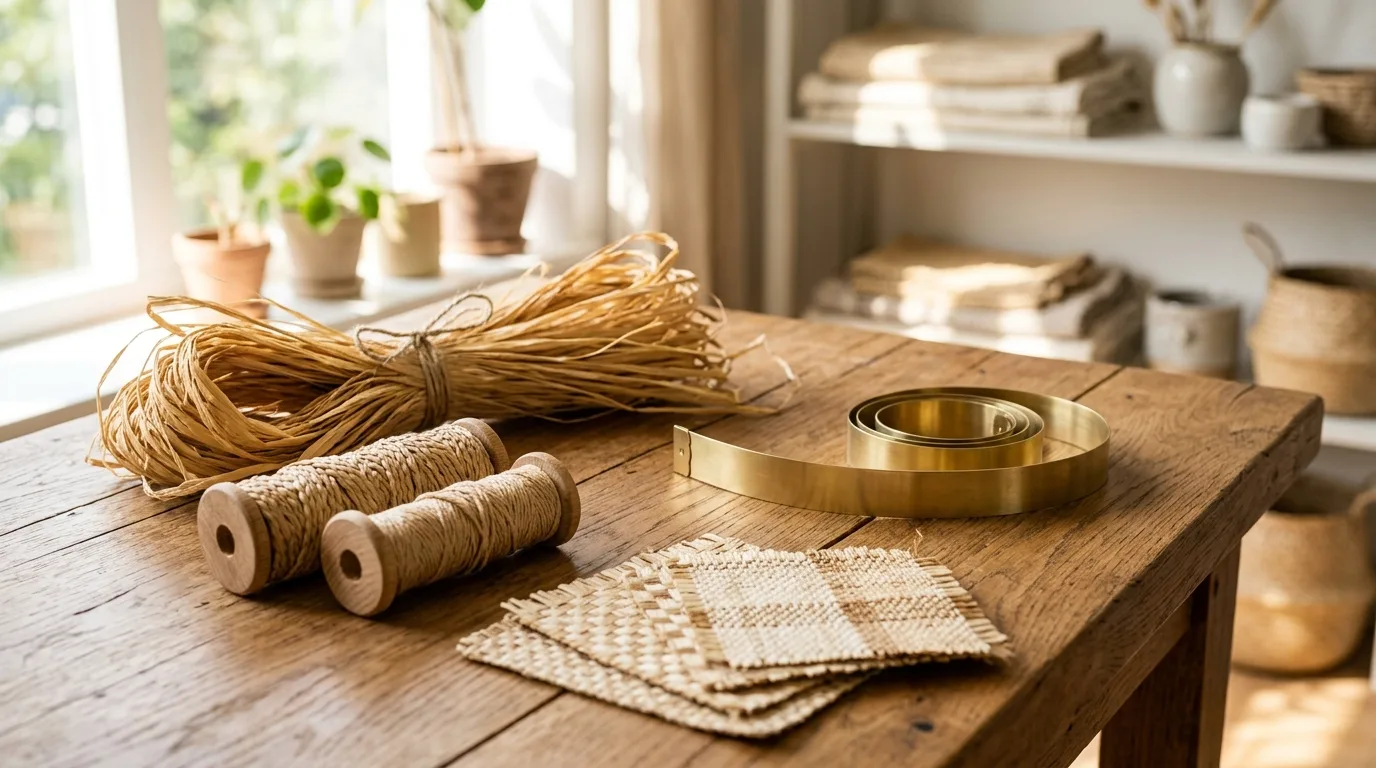
Most "handbag manufacturers" in China are trading companies. Here is how to tell the difference before you wire a deposit - with the questions we expect buyers to ask us.
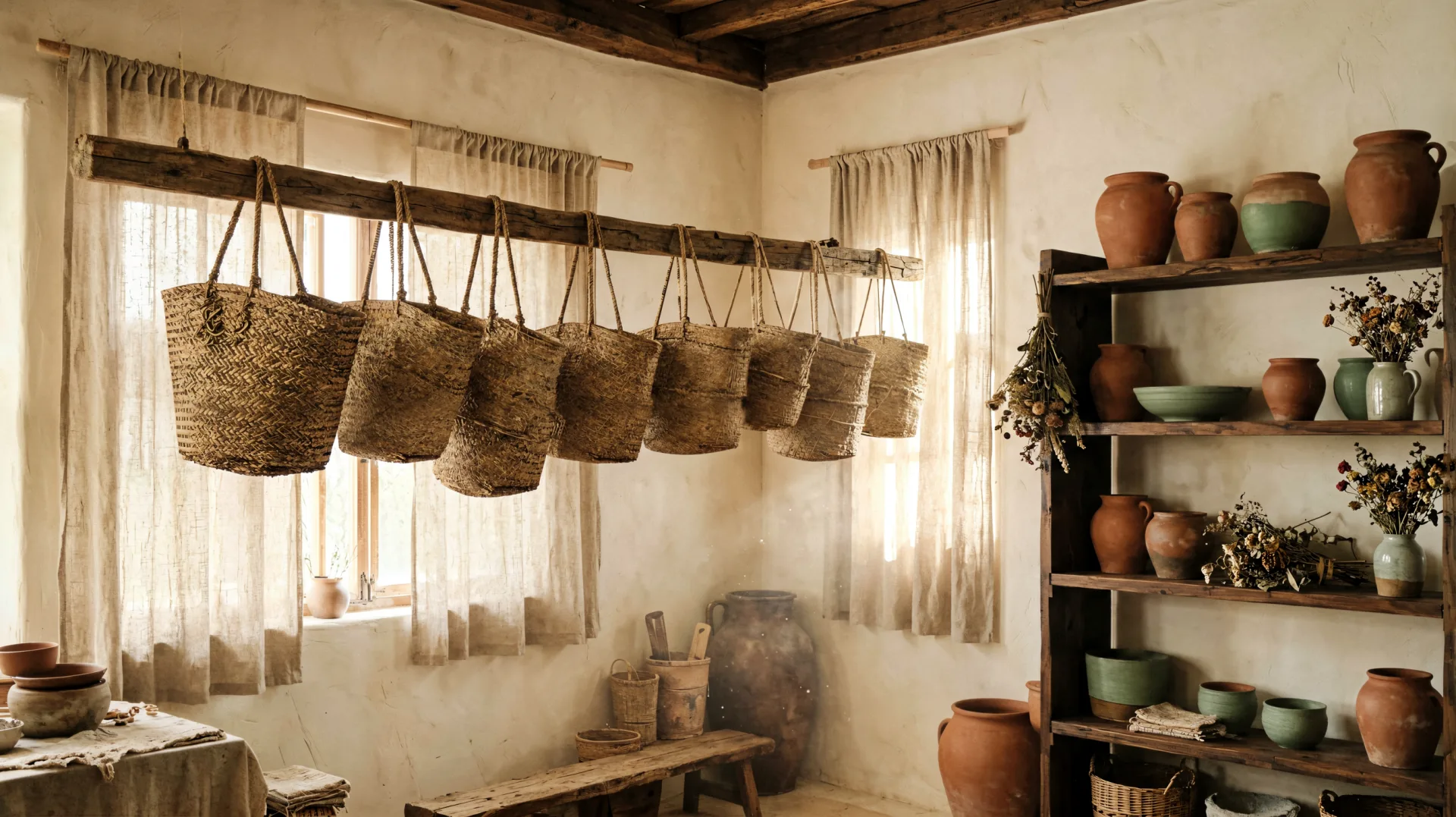 Figure 1: Finished goods air-drying before packing — the last station before a pre-shipment inspection.
Search "handbag manufacturer in China" and you will get several thousand results that look identical: a stock photo of a sewing floor, a row of certification badges, and a contact form. Nearly all of them call themselves handbag manufacturers. In practice, you are looking at three completely different kinds of business dressed in the same layout.
The first builds bags. The second buys bags from the first and resells them with a margin. The third is an aggregator that forwards your enquiry to whichever factory quotes lowest that week.
The difference matters most at exactly the moment it is hardest to see — after you have paid the deposit, when a dye lot comes back wrong, or when the hardware you specified arrives two shades off and nobody upstream can tell you why.
This guide is the checklist we would want a buyer to run on us. It covers what to ask any handbag manufacturer in China, what a good answer sounds like, and where the money usually goes missing.
Why One Search Term Returns Three Different Businesses
China's export ecosystem is layered, and the layers are not dishonest — they are just invisible from a search results page.
Trading companies are legitimate and often efficient. They handle documentation, consolidated shipping, and English-language project management well. What they usually do not control is the weaving floor, the mold library, or the dye house booking. When something goes wrong in production, their answer is "I will check with the factory", and that round trip can cost you a week.
Factories own the equipment and the artisans. A handbag factory that runs its own weaving floor will usually quote a shorter development cycle, because no step has to be sent out. Their weakness is the opposite: English communication, sampling administration, and export paperwork are often thinner. A factory that cannot read your technical pack correctly will still produce something — just not what you specified.
Workshops with in-house development sit between the two. They own production for their core categories and bring in specialists for adjacent work. This is the most common shape for handwoven and raffia goods, because the craft is hard to scale and easy to fragment.
None of these is automatically the right partner. The point of vetting is to know which one you are talking to, so you can staff the relationship correctly — more project management for a factory, more technical verification for a trader.
The Eight Questions That Separate a Factory from a Trading Company
These are not trick questions. They are the questions a buyer should be able to ask without embarrassment, and a serious handbag manufacturer should be able to answer without a week of internal emails.
1. Who owns the weaving floor?
Ask for a short live video call — not a photo set. A photo set is a marketing asset; a video call is a fact. Ask them to walk from the raw material store to the blocking molds to the finishing bench in one continuous shot.
A trading company will usually offer to "arrange a factory visit later". A real producer will just turn the camera around.
2. Can I see the mold library?
Handwoven bags are shaped on wooden blocks. Those blocks are the difference between a silhouette that repeats reliably and one that drifts by two centimetres per batch. Ask how many active molds they hold and whether they can send photos of a few with dimensions written on them.
Beware any handbag manufacturer who answers only in the abstract ("we can make any shape"). Custom shapes do not start from nothing; they start from an existing block, a modification, or a new pattern that has to be cut and tested.
3. What happens upstream when a dye lot fails?
Natural fibres vary by harvest. Dyed raffia and paper straw can shift shade between lots even with the same Pantone reference. The question that reveals a producer is: what is your protocol when a lot comes back off-tone?
A producer will describe batch reservation, retained swatch cards with tolerance bands, and a decision point before weaving starts. A reseller will describe a conversation with their supplier.
4. Who signs the inspection report?
Ask for the inspection document template before you order. Look for: a named inspector, a date, per-batch sample size, and a list of checkpoints specific to the product — handle anchorage, joint tensile, base flatness, lining alignment, hardware finish.
A document with only "quality: OK" is a formality. A document that names what was measured is a control.
5. What is the real MOQ logic?
Low MOQ is not a personality trait; it is a cost allocation. Ask why the number is what it is, and you will learn how the factory is organised.
For reference, our own structure is 50 pcs per style per colour for standard shapes, 100 pcs for a newly cut mold, 50 pcs for a leather or woven brand label, and 100 pcs for a reusable metal logo plate. Those numbers exist because a new mold has to be cut and proofed, and a metal die has to be machined — not because we like round numbers.
If a supplier quotes an extremely low MOQ with no explanation, ask which cost they are absorbing and for how long. Someone is paying for it eventually.
6. How do they price a change you request after sampling?
Every project changes after the first sample. Buyers ask for a wider base, a different handle drop, a softer lining. The useful test is not whether the supplier says yes, but whether they can explain the cost delta.
A structured answer separates material cost, labour time, and tooling. An unstructured one says "we will check and get back to you".
7. What do they do about compliance programmes?
This is where a lot of sourcing goes wrong, because the honest answer is uncomfortable and the dishonest answer is easy.
Ask directly: do you hold any third-party certifications? Then ask: what can you do if our programme requires an audit?
We do not currently hold third-party certifications. We do support third-party inspection and live video audits, and we will say that in writing. If a supplier claims a certification, ask for the certificate number and the issuing body, then verify it independently — it takes five minutes and it is the single highest-yield check in this entire list.
8. Who answers your emails, and in what time zone?
Not a formality. A factory with one English-speaking export coordinator and a 15-hour time difference can still be a good partner — but you need to know the response rhythm before you plan a retail calendar around it.
Ask for their working hours, their standard quote turnaround, and what happens on a Friday afternoon your time. Vague answers here predict vague answers everywhere else.
What a Technical Pack Should Contain
A serious handbag manufacturer will ask you for this. If nobody asks, that is itself a signal.
| Item | Why it matters to the factory |
|---|---|
| Reference image or sketch, front and side | Silhouette selection and mold matching |
| Target dimensions (W × H × D, handle drop) | Blocking and panel calculation |
| Material and finish | Fibre type, dye approach, weave density |
| Hardware spec (alloy, plating, finish) | Die selection or new tooling |
| Lining and interior layout | Pattern drafting and labour estimate |
| Branding method and placement | Label, patch, or print process |
| Target quantity by colourway | MOQ and material reservation |
| Target ship window | Production scheduling |
| You do not need a CAD file to start. A clear reference image, a dimension list, and a target price band will get you a realistic answer faster than a polished but incomplete pack. |
The Sample Round: What 10–15 Days Actually Buys
Our first-round sampling runs 10–15 days. That window is not idle time; it is the period in which the mold is matched or cut, the fibre is selected and tested for moisture, the weave density is calibrated, and the handles are attached and load-checked.
Three things to insist on when the sample arrives:
- Measure it yourself. Width, height, depth, handle drop. A 1 cm drift at sample stage becomes a 3 cm drift across a bulk run.
- Weigh it empty, then load it. A handwoven bag carries weight through the handle anchorage and the base weave, not the body panel. If the base bows at 5 kg, the structure needs revision before bulk.
- Photograph it under daylight. Showroom lighting hides shade inconsistency in natural fibre. Your customers will see it outdoors.
Approve in writing, with photographs attached. A sample approved by email thread alone is the most common source of later disputes.
Five Red Flags in a Handbag Factory Quotation
- No breakdown. One number for the bag, with no separation of material, labour, trim, and packing. You cannot negotiate what you cannot see.
- Certification logos with no numbers. See question 7.
- A lead time shorter than the craft allows. Handwoven goods have a floor. If someone promises 15 days for a 500-piece custom run with new molds, ask which step they are skipping.
- No sampling charge, no sampling process. Free samples usually mean a stock item, not a development round.
- Reluctance to name a ship port or incoterm. FOB, CIF, EXW and DDP are standard vocabulary. A supplier who cannot state a port is not yet export-ready.
What This Handbag Manufacturer in China Tells Buyers Up Front
Since this guide asks you to interrogate handbag manufacturers in China, it is only fair to answer the same questions about ourselves.
We are a custom handbag manufacturer, not a trader. NOLVA has operated from Dongguan, Guangdong since 2014, with in-house weaving, blocking, and finishing for natural-fibre bags. Our output runs 15,000–20,000 pieces a month across five material lines and six core silhouettes.
We do not hold third-party certifications. We support third-party inspection and live video audits. We would rather tell you this in the first email than have you discover it during onboarding.
Our terms are published, not negotiated per buyer. MOQ 50 pcs per style per colour for standard shapes, 100 pcs for a new mold. First-round samples in 10–15 days. Bulk production 30–45 days, and 45–60 days where custom dyeing or new tooling is involved. Standard quotes within 24 hours; custom costing in 2–3 working days.
We ship FOB Shenzhen or Guangzhou, CIF, EXW, and DDP, primarily on T/T.
Every order is fully inspected before shipment across six process steps, and we can hold a load test up to 10 kg where the design supports it.
If any of that does not fit your programme, better to know now — for both of us.
A One-Page Vetting Checklist
□ Live video walk-through of raw material → molds → finishing
□ Mold library: count, photos, dimensions
□ Dye-lot failure protocol described in concrete steps
□ Blanket purchase order and phased releases available
□ Inspection template seen before ordering
□ MOQ logic explained, not just quoted
□ Cost delta for post-sample changes explained item by item
□ Certification claims backed by number and issuing body
□ Working hours and quote turnaround confirmed in writing
□ Sample measured, load-tested, and photographed in daylight
Talk to the People Who Make the Bags
If you are evaluating suppliers for a spring or resort programme, the most efficient next step is a short technical conversation rather than a catalogue request.
Send a reference image, a target dimension, and a quantity band. We will tell you which silhouette block is closest, what the MOQ implications are, and where the design will cost you money — usually within one working day for standard shapes.
- Browse the current handwoven bag collection for silhouette references
- Read how we structure bulk wholesale programmes by tier
- See the custom OEM and ODM process if you are developing a new shape
- Or review the private label programme if you only need branding applied
- For quality methodology in detail, see our handwoven bag quality control guide
- For how order size affects unit cost and lead time, see the MOQ and lead time guide